
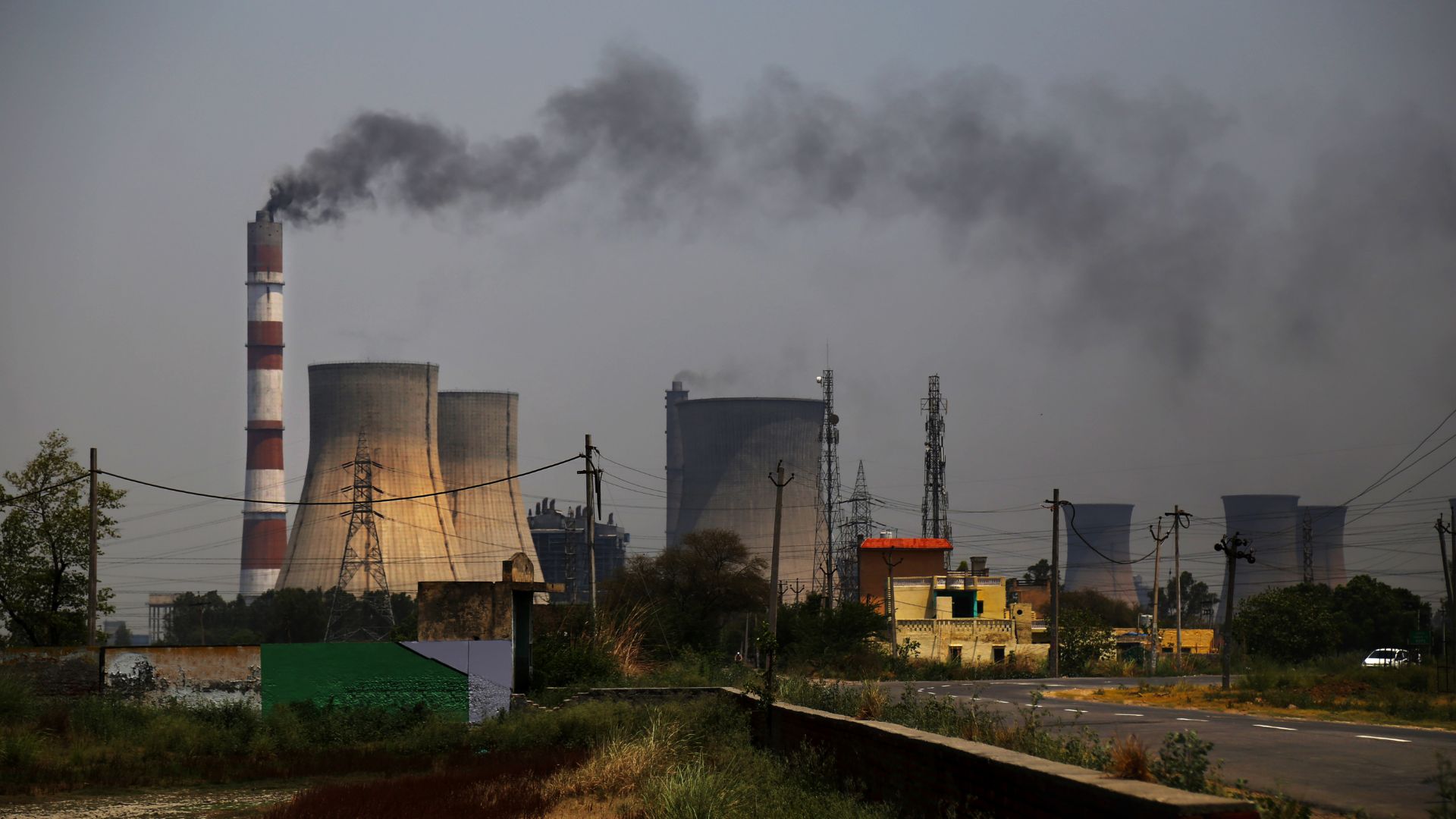
 Against the backdrop of intensifying global discussions on phasing out fossil fuels at COP28 in Dubai, a report by the Centre for Financial Accountability (CFA) and Climate Trends, an environmental think tank, reveals a noteworthy trend for the second consecutive year. In 2022, no coal power plant in India secured project finance lending, underscoring a significant shift towards renewable energy projects.
The 2023 Coal vs Renewables Investment Report, examining 68 project finance loans across 11 coal and renewable energy projects, disclosed that all projects securing financial closure in 2022 were in the renewable energy sector. However, the total project finance amount of INR 18,577 crore (USD 2.36 billion) marked a 45% decrease from 2021 levels, reflecting potential external factors such as pandemic-induced project delays, supply chain disruptions, higher interest rates, and increased costs due to domestic policies.
Solar power emerged as the dominant force, constituting 40% of financing and featuring in six out of the eleven deals. Despite a substantial decrease of over 64% in solar lending, amounting to INR 7,361 crore (USD 935 million), the sector financed 1,849 megawatts (MW) of solar projects. In contrast, wind power made up only 4% of total renewable energy lending, with a more than 80% decrease compared to 2021, financing two projects totaling 144 MW of wind energy.
Aarti Khosla, Director of Climate Trends, emphasized the significance of the analysis in aligning with India’s commitment to the NDC 2030 target of generating 500 gigawatts of electricity from non-fossil fuel sources. Khosla asserted that prioritizing finance for renewable energy not only strengthens India’s climate leadership but also ensures the nation outperforms its commitments.
The report indicated that commercial banks played a pivotal role, contributing to 68% of overall funding through five deals. Commercial lending for renewable projects, however, decreased by 51% compared to 2021 levels. The Coöperatieve Rabobank UA emerged as the largest lender, with a loan of INR 7,749 crore (USD 985 million), surpassing the largest renewables loan of 2021 provided by L&T Finance.
Joe Athialy, Executive Director of the Centre for Financial Accountability, highlighted the reluctance of financial institutions to fund coal projects, given the negative global outlook on coal. Athialy emphasized that the financial case for new coal plants is weakening, making renewables, particularly those paired with storage, a more competitive and cost-effective option.
The report also spotlighted Rajasthan as the leading beneficiary of renewable energy lending in 2022, receiving over INR 7,579 crore (USD 963 million).”Tariffs from recently commissioned coal plants demonstrate that renewables paired with storage is now competitive, if not the cheaper option, to deliver round-the-clock power.” – Ashish Fernandes, CEO, Climate Risk Horizons.
India, with nearly 132 GW of installed renewable energy from its earlier target of 175 GW, remains committed to meeting additional power demand through renewables. As global financial institutions reduce investments in coal projects, the report suggests that policies and regulations should ensure a redirection of funds towards renewable energy projects to sustain this positive trajectory.
This article was originally published in Times of India and can be read here.
𝗖𝗲𝗻𝘁𝗿𝗲 𝗳𝗼𝗿 𝗙𝗶𝗻𝗮𝗻𝗰𝗶𝗮𝗹 𝗔𝗰𝗰𝗼𝘂𝗻𝘁𝗮𝗯𝗶𝗹𝗶𝘁𝘆 is now on 𝗧𝗲𝗹𝗲𝗴𝗿𝗮𝗺 and 𝗪𝗵𝗮𝘁𝘀𝗔𝗽𝗽. 𝘊𝘭𝘪𝘤𝘬 https://t.me/cfa_ind 𝘵𝘰 𝘫𝘰𝘪𝘯 𝘰𝘶𝘳 𝘛𝘦𝘭𝘦𝘨𝘳𝘢𝘮 𝘤𝘩𝘢𝘯𝘯𝘦𝘭 channel and our WhatsApp channel at https://bit.ly/cfa-whatsapp and 𝘴𝘵𝘢𝘺 𝘵𝘶𝘯𝘦𝘥 𝘵𝘰 𝘵𝘩𝘦 𝘭𝘢𝘵𝘦𝘴𝘵 𝘶𝘱𝘥𝘢𝘵𝘦𝘴 𝘢𝘯𝘥 𝘪𝘯𝘴𝘪𝘨𝘩𝘵𝘴 𝘰𝘯 𝘵𝘩𝘦 𝘦𝘤𝘰𝘯𝘰𝘮𝘺 𝘢𝘯𝘥 𝘧𝘪𝘯𝘢𝘯𝘤𝘦.


