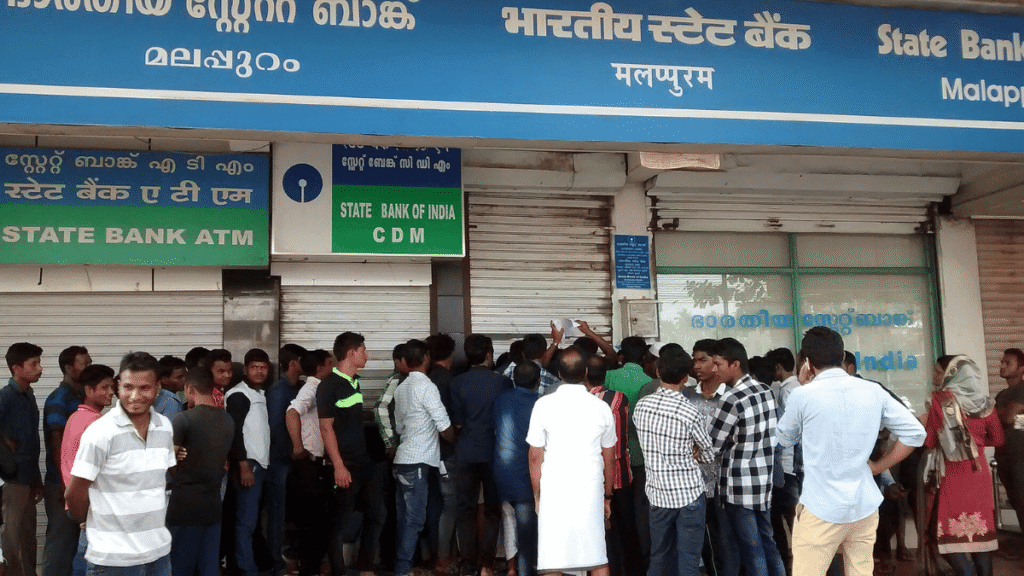
On 8 November 2016, we were told that 86% of the country’s cash had just been retired overnight. I was a student in Delhi with a bare-minimum bank balance, just enough to survive on, and no cash in hand. So I joined queue after queue, day after day, to win a single ₹2,000 note, a lottery prize you couldn’t spend. All I needed was a sanitary pad, ₹30 to ₹50, and shop after shop eyed my note as if I’d offered a diamond and asked for a refund. I bought things I didn’t need to coax out some change, until one kind shopkeeper finally handed over the rest. I saved every rupee of it for my ticket to travel back home for the Christmas vacation. It was also the first chill of winter, with Delhi’s smog moving in, so we queued for cash and inhaled for free.
The nation’s sacrifice was supposed to buy something. What it bought was this: 99.3% of the banned ₹15.42 lakh crore came right back to the banks. The black money did not vanish. Only the patience of the poor did. Cash did not retire either: currency in circulation dipped to ₹13.10 lakh crore in March 2017 and now stands at ₹41.24 lakh crore. Daily wage workers, small traders and students with minimum balances stood in the lines, and nobody who took the decision stood in any of them.
Then comes the irony. The drive was meant to end fake notes, yet RBI’s latest annual report shows fake ₹500 notes detected in the banking system rose 20.5% to 141,907 pieces in 2025-26. The numbers are small next to the cash in circulation, but the promise was a clean sweep, not a smaller mess. Even the hero of my queueing saga, the ₹2,000 note, has since been withdrawn. Counterfeiters, it seems, took the “new notes” more seriously than the rest of us.
And the air? Even before Diwali, Delhi’s AQI was 369 on the eve of the festival, and GRAP Stage 3 curbs had already been invoked. People were struggling to breathe, so what followed was the most predictable event of the year: PM2.5 touched 993 in Punjabi Bagh, over 66 times the WHO’s 24-hour guideline. Then the monitors went quiet, with 45 of 59 stations missing readings for at least one pollutant. So what has changed in ten years? Precisely nothing. Cash is still king, fakes still circulate, and Delhi’s winter still arrives with a cough. The queue has simply moved from the bank counter to the air we breathe, and the people at the back of it are still the ones who never made the decision.