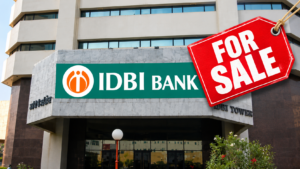
 The Cabinet Committee on Economic Affairs has approved the sale of IDBI Bank to a subsidiary of Fairfax, Canada, in a dubious manner. Now, the RBI has to process the deal. The deal can still be stopped if people’s pressure is mounted, as has happened with many such proposals earlier.
Please read previous articles on this issue in my column Random Reflections:
When the whole country is agitating against SIR and demanding electoral integrity, and the United Forum of Bank Unions is busy negotiating a five-day week with the High Power Committee, the Union Government has taken this decision.
The People’s Commission on Public Sector and Public Services has demanded the withdrawal of this decision. IDBI Bank employees are agitating, and they have announced a two-day strike on November 2 and 3. UBFU has appealed to its members to support the strike and participate in the agitation programmes. It should announce its own strike against privatisation.
First, let’s see certain facts:
The Industrial Development Bank of India (“IDBI”) was established in 1964 under the IDBI Act, 1964, initially as a wholly owned subsidiary of the RBI. IDBI’s ownership was transferred to the Government of India in 1976, and it was regarded as the principal Development Financial Institution (DFI), catalysing broad-based industrial development in India, particularly during the pre-economic reform era.
Institutions like the Small Industries Development Bank of India (SIDBI), the Exim Bank (India), the National Stock Exchange of India (NSE), the National Securities Depository Limited (NSDL), the Stock Holding Corporation of India Limited (SHCIL), Credit Analysis & Research Limited, and the Entrepreneurship Development Institute of India were established with IDBI’s support.
Error of the Government
The error was made in 2004, when IDBI was changed into IDBI Bank, turning it into a commercial bank as opposed to a DFI. The NDA 1 government accomplished this through the IDBI (Transfer of Undertaking and Repeal) Act, 2003. On January 21, the RBI declared IDBI Bank a private bank with Parliament’s approval. This was done with the intention of selling it to foreigners, as private banks can have up to 74% foreign investment. When 94.71% of the shares are held by the Government and LIC, a public enterprise that is an arm of the State, how can it be called private?
Due to mismanagement, the bank’s NPAs increased. Mr. Swamy Elanchezian, then General Secretary of the officers’ association affiliated with the All India Bank Officers Confederation, wrote a letter highlighting frauds and mismanagement. Instead of enquiring into it, he was charge-sheeted and dismissed from the bank. The bank incurred huge losses.
IDBI Bank’s losses from 2016 to 2020 were as follows:
-
- 2016 – Rs. 3,665 Cr
- 2017 – Rs. 5,158 Cr
- 2018 – Rs. 8,238 Cr
- 2019 – Rs. 15,116 Cr
- 2020 – Rs. 12,887 Cr
– Total – Rs. 45,064 Cr
As requested by the Government of India, LIC purchased 51% of the shares at an average price of around Rs. 62 in 2018 for Rs. 21,624 Cr and infused Rs. 4,743 Cr in 2019. This amount is, in fact, LIC policyholders’ money. The Government contributed Rs. 4,557 Cr in 2019 to save the bank.
The securities premium account, which had a balance of Rs. 50,732.27 Cr, was used to offset the accumulated losses, which, as of March 2020, totalled Rs. 45,586 Cr (including the loss incurred in 2015). This incident was unusual.
After LIC took over the management of the bank, it transformed the institution, resulting in a profit of Rs. 1,359 crore in 2021 and Rs. 2,439 crore in 2022. In 2022–23, it was Rs. 3,706 crore; in 2023–24, it increased to Rs. 5,788 crore; and in 2024–25, it increased to Rs. 7,630 crore. In 2025–26, the profit reached Rs. 9,513 crore. So, there is steady growth in profit. Selling a profitable bank that LIC is expertly managing makes absolutely no sense, especially when the financial conditions are favourable right now.
There were 19,108 staff members as of March 31, 2026. Of these, 78% are officers, 12% are clerical staff, and 12% are subordinate staff. The number has now gone up to 20,693. IDBI implements the Reservation Policy, which will not continue after this sale if it goes through. There are 2,200 branches.
As of March 2026, deposits stood at Rs. 347,163 Cr and advances at Rs. 253,626 Cr. The total business is Rs. 600,789 Cr. There are around 3 crore customers. A total of 60.72% of the shares of this huge bank is going to be sold for just Rs. 52,878 Cr. The current market value of the land and buildings will be more than this. As stated by Mr. E. A. S. Sarma, former Secretary, Economic Affairs, the land and buildings in Hyderabad alone are worth Rs. 13,450 Cr.
Injustice to LIC, Which Saved the Bank
Because of its association with IDBI Bank, LIC gets 59% of its bancassurance policies through IDBI Bank, which it will lose. The Government has already created a huge mess by selling 3.5% of LIC’s shares. The share price has come down to Rs. 382 from the Initial Public Offering (IPO) price of Rs. 949. This has nothing to do with LIC’s performance. This will go down further with the IDBI Bank sale. What LIC has invested is policyholders’ money. A case is already awaiting further hearing in the Supreme Court. The bonus paid to LIC policyholders from its profits will go down. Their money was used to save IDBI Bank.
Controversies Involving Fairfax
In 2006, a corporate war started with the filing of a $6 billion lawsuit, which went on for a decade, with the majority of the firms accused going free, except for a few small firms that were asked to pay just $31 million against $6 billion.
In 2014, Fairfax was accused of insider trading and investigated by Quebec’s securities regulator.
Environmental groups have accused Fairfax of underwriting billions of dollars in carbon-intensive projects.
Fairfax has a 40% shareholding after buying 51% of the shares in 2018–18 in Catholic Syrian Bank (CSB). CSB has not paid wage increases in accordance with industry-level settlements since 2020. RBI guidelines have been specifically relaxed, providing two years for Fairfax to merge CSB with IDBI or sell its shares in CSB. This is favouritism.
Quess Group, in which Fairfax is the major promoter, was accused of concealing Rs. 880 crore by the Central Board of Direct Taxes in 2021.
In 2024, the short-selling firm Muddy Waters, which had been accusing Fairfax, attacked it for artificially inflating its books through India Holdings.
In 2024, Fairfax’s auditors were fined Rs. 50 lakh by the National Financial Reporting Authority (NFRA), the financial reporting regulator, for false filing.
Prem Watsa, Chairman of Fairfax, with a 42% shareholding, is writing books and articles praising Prime Minister Modi to get favours, as reported by the media. He is also accused personally by short-selling firms of violating norms.
The price fixed for IDBI by its valuers was reduced to benefit a single buyer instead of floating new tenders in which Indian banks could have been asked to bid.
Other Investments of Fairfax in India
Fairfax has a controlling shareholding of 64% in Bangalore International Airport Ltd.
It has an 88% holding in National Collateral Management Services Ltd.
It owns 49% of the shares in Go Digit General Insurance.
It holds 13.6% of the shares in IIFL Finance and IIFL Capital Services.
It has a prominent shareholding in 360 ONE, a wealth management company.
It has significant investments in 5paisa Capital, a discount brokerage firm.
Fairfax has considerable investments in manufacturing, logistics, and chemicals, including Chemplast, Sanmar, Fairchem Organics, Maxop Engineering, Jainix Engineering, and Global Aluminium.
Its Arms Extend to Business Services and Tourism
Fairfax is the primary promoter of Quess Corp, Thomas Cook (India) Ltd, and Sterling Holiday Resorts.
While large industries are prohibited in India from owning or promoting banks, how can a foreign corporate that wields control in various industries own an Indian bank? Are the Government and the RBI blind?
Earlier Sales/Permissions to Foreigners
Lakshmi Vilas Bank Ltd was sold outright to DBS Bank, which is based in Singapore, by providing an exception to the permitted 74% foreign holding limit and allowing 100% ownership. The shareholders who created the bank were paid nothing.
RBL Bank is controlled by Dubai-based Emirates NBD, with 60% of the shares, whereas voting rights are restricted to 26% by the RBI. Practically, RBL is owned by Emirates NBD.
Present Foreign Shareholdings in Indian Private Banks
There are already 44 foreign banks operating in India. How many of our banks are operating abroad?
See the shareholdings of foreigners in Indian banks:
-
- Federal Bank – 32%, of which Blackstone holds 11.06%
- Karur Vysya Bank – 18.10%
- South Indian Bank – 25.5%
- ICICI Bank – 34.68%
- Axis Bank – 38.05%
- HDFC Bank – 39.39%
If the sale of IDBI goes through, more banks will soon be taken over by foreigners, as banks are making good profits.
Shareholders’ investments are minuscule when compared with the deposits of banks, which are used to give loans and make profits. The interest rate paid to depositors, which had reached 18%, has gradually been brought down to 6.75% to benefit the shareholders. Actually, depositors should be treated as shareholders and paid a share of the profits, as LIC does for its policyholders in the form of bonuses.
The best thing to do would be to nationalise private banks, as was done in 1969 and 1980, so that the Government gets good dividends, depositors get their due share, and the goals set out in the Constitution of achieving an equitable society are fulfilled, along with the Reservation Policy in jobs.
May Lead to Privatisation of Public Sector Banks
Even in the public sector, foreigners hold 11.83% of the shares in the State Bank of India (SBI). The Finance Minister has already announced plans to sell three public sector banks to the private sector. Now, NITI Aayog seems to have recommended the privatisation of Central Bank of India and Indian Overseas Bank. In SBI, the Government holds only 55%. Just by amending the law, the Government’s shareholding can be reduced to 49% instead of 51%, and the bank will become a private bank. Twice, US Treasury officials have requested the Indian Government to privatise SBI.
Please remember that Mr. Yashwant Sinha, as Finance Minister, introduced a bill in Parliament in December 2000 to reduce the Government’s shareholding in public sector banks to 33%. The bill was sent to the Standing Committee and, with the change of Government in 2004, was shelved. Now, Standing Committees are not even consulted.
If IDBI privatisation is not stopped, bank employees across the entire industry should stand with other trade unions and people’s organisations to change the Government at the earliest. Join the People Against SIR movement.
Foreign corporates such as Microsoft, Alphabet (Google), Amazon, Apple, Airbus, VinFast, Nissan, Renault, Nestlé, Unilever, etc., have been provided with many concessions in India.
There are many joint ventures and foreign companies with 49% shareholding operating in India.
Google Pay and PhonePe, without any banking licence, have access to bank customers’ data.
Why are foreigners showing so much interest in India?
Because India has a huge population, good agricultural production, manpower, and a Government willing to sell everything. It took 200 years to send out the East India Company and its masters. If the politicians and the people of India do not wake up, India will be gone.
Thomas Franco is the former General Secretary of the All India Bank Officers’ Confederation and a Steering Committee Member at the Global Labour University.
Centre for Financial Accountability is now on Telegram and WhatsApp. Click here to join our Telegram channel and click here to join our WhatsApp channeland stay tuned to the latest updates and insights on the economy and finance.