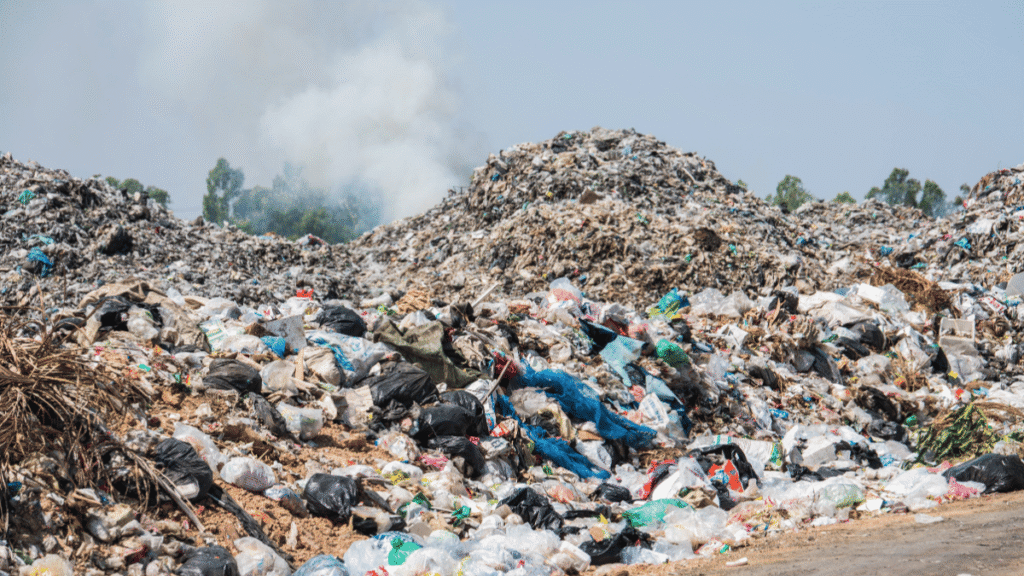
HYDERABAD: Hyderabad’s Jawaharnagar landfill emitted methane at an estimated rate of 5.9 tonnes an hour in 2025. It ranked fourth among the world’s 25 highest-emitting waste sites. The ranking comes from a satellite-data analysis by the University of California, Los Angeles (UCLA), and Carbon Mapper.
Published in April 2026, the findings highlight gaps in Hyderabad’s waste-management system. Despite large-scale waste-to-energy (WTE) incineration, organic waste continues to accumulate and release methane.
Delhi study questions climate benefits of waste incineration
A report released by the Centre for Financial Accountability (CFA) on October 28, 2026, questions the climate benefits of waste incineration. Titled The Climate Cost of Burning Waste: The Carbon Intensity of Waste-to-Energy Incinerators in Delhi, and Why It Should Not Be Funded as Climate Action, the report examines four operational WTE plants in Delhi.
CFA and the National Alliance for Climate and Ecological Justice (NACEJ) jointly conducted the study. It estimates that the plants generate electricity with a fossil-carbon intensity of about 3.4 kg of carbon dioxide (CO₂) per kilowatt-hour (kWh) of net electricity exported.
According to the report, this figure is about 4.7 times the Central Electricity Authority’s weighted-average emission factor for Indian grid electricity. It is also 3.5 times the coal emission factor used in the study.
The findings raise questions about treating mixed-waste incineration as climate action. They also challenge the use of climate finance to support such facilities.
Fly ash contamination raises environmental concerns
Meanwhile, civil society groups and affected residents in Hyderabad have raised concerns about pollution from waste-to-energy facilities. They have flagged fly-ash disposal, leachate, groundwater and soil contamination, and gaps in pollution monitoring.
A joint fact-finding exercise in 2025 documented community concerns about the plants and their environmental impact.
The Central Pollution Control Board (CPCB) has also reported high cadmium concentrations in fly ash from the Jawaharnagar and Dundigal facilities. A report submitted to the National Green Tribunal recorded 850.65 mg/kg of cadmium in Jawaharnagar fly ash. This exceeds the cited permissible limit of 0.8 mg/kg by more than 1,060 times.
At Dundigal, the reported cadmium concentration reached 956.69 mg/kg. This is nearly 1,200 times the same limit. The figures raise further concerns about heavy-metal contamination and the safe handling of ash.
Waste management challenges persist in Hyderabad
The findings highlight two major environmental concerns: methane emissions from accumulated waste and potential contamination from fly ash.
Waste-to-energy plants can process large quantities of waste. However, they do not eliminate the need to manage organic waste and its decomposition. Hyderabad must therefore address methane emissions alongside safe ash disposal and effective pollution monitoring.
The findings also raise broader questions about relying on incineration as the principal solution to the city’s waste problem. Organic waste continues to accumulate and decompose, highlighting the need for a wider waste-management strategy.
This article was originally published in HyderabadMail you can it read here.